
Privacy is one of the most common things homeowners want from their outdoor space — and a fence isn’t always the answer. Well-chosen planting often looks considerably better and improves with age.
Why Planting Often Outperforms Fencing
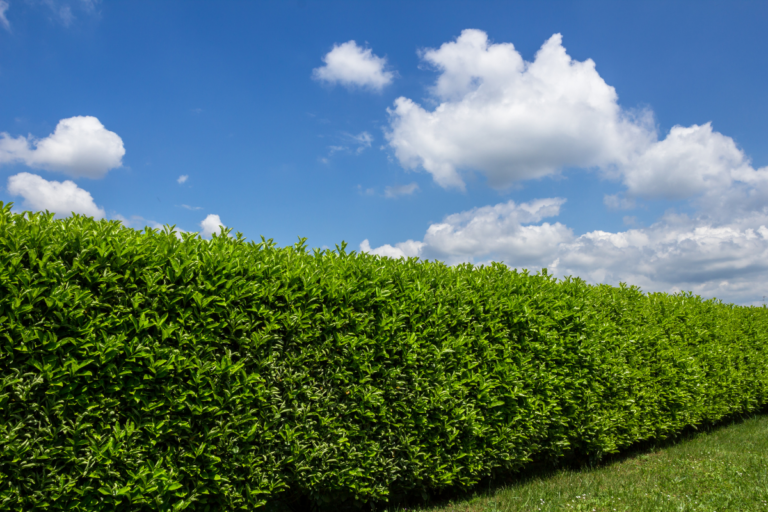
A fence gives you an immediate barrier, but it’s also a fixed height, a fixed material, and over time a maintenance liability. Timber fences grey, warp, and eventually need replacing. Well-chosen planting improves with age — filling out, thickening up, and becoming more effective as a screen over time.
The Best Screening Plants for Queenstown
Griselinia littoralis is the most reliable privacy hedge in the region — frost-hardy, handles dry summers, and grows into a dense, attractive screen. Left to grow freely it will reach 4–6 metres; trimmed, it holds whatever height you need.
Photinia (Red Robin) grows faster than Griselinia and provides excellent density. The seasonal red new growth makes it genuinely attractive as well as functional.
Pittosporum tenuifolium works well for lighter, more informal screening — a softer option that suits garden styles where you want privacy without a hard boundary feel.
Leyland Cypress is the fastest growing option and most effective for rapid screening. The trade-off is that it needs regular trimming to stay manageable.
Layered Planting for Deeper Privacy
A single row of hedge planting creates a screen, but layered planting creates a genuine sense of enclosure. A taller boundary hedge at the rear, mid-height shrubs in front, and lower planting at the edges draw the eye through the garden rather than stopping it at a hard edge.
Vertical Planting and Climbing Plants
Where space is limited, climbing plants on a trellis or wire frame can provide targeted privacy without the footprint of a full hedge. Trachelospermum (star jasmine), Clematis, or a well-managed Wisteria can screen a specific sightline effectively in a narrow space.
Specimen Trees for Canopy Privacy
If overlooking from above is the issue, a well-placed specimen tree is often more effective than any hedge. A deciduous tree like a Gleditsia or ornamental pear provides good summer canopy cover when privacy matters most, while still allowing light in through winter.
How Long Does It Take?
Griselinia typically takes three to five years to form a solid screen from a small plant; Photinia somewhat faster. Planting larger, more established specimens shortens the timeline significantly. For many homeowners, reasonably sized plants in well-prepared soil, with patience through the first two seasons, gives the best overall result.
Ready to Create More Privacy?
Peak to Peak source and supply hedging and screening plants suited to Queenstown’s specific climate, and handle installation including soil preparation and initial establishment care. They also manage ongoing hedge trimming for residential and rental properties across the region — trusted by homeowners and property managers since 2002.
Talk to the team to get in touch and get a quote, you can also call us on +64274314102.