
A low-maintenance garden isn’t a neglected garden. It’s a well-planned one. The secret is making the right decisions upfront — on plants, structure, and soil — so the garden largely looks after itself once it’s established.
Choose Plants That Do the Work For You
The single biggest lever in any low-maintenance garden is plant selection. Plants that are genuinely suited to Queenstown’s alpine climate — frost-hardy, drought-tolerant once established, and structurally sound — need far less intervention than species that are fighting the environment.
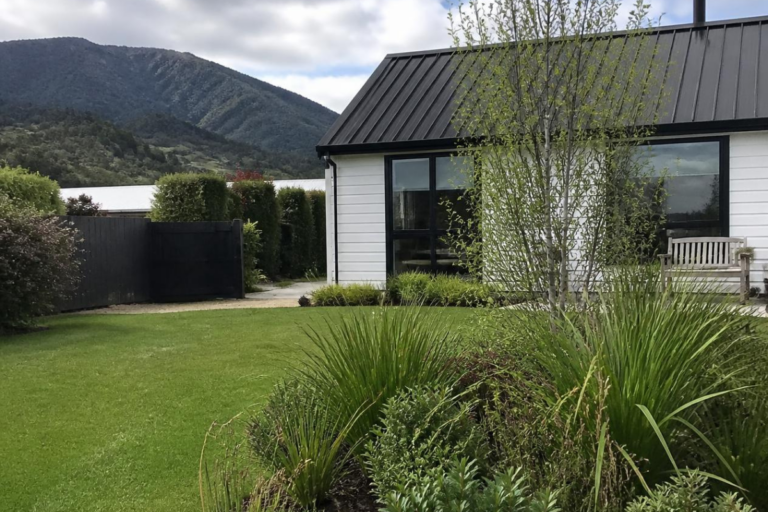
Griselinia, Hebe, lavender, and ornamental grasses are all excellent low-maintenance choices for this region. Once established, they require minimal watering, produce little invasive growth, and look attractive year-round with occasional trimming. Avoid fast-growing or tender species that need constant management to stay in check.
Mulch Generously — and Keep It Topped Up
A thick layer of mulch — 7 to 10cm across garden beds — is one of the most effective low-maintenance investments you can make. It suppresses weeds, retains moisture through Queenstown’s dry summers, regulates soil temperature through the extremes of winter and summer, and gradually improves soil health as it breaks down.
Most gardens benefit from a fresh application of mulch every one to two years. The upfront effort pays back in significantly less weeding and watering for seasons to come.
Invest in Good Edging
The edges of a garden do a disproportionate amount of work for how it looks overall. Clean, defined edges between lawn and beds make a garden look intentional and tidy even when the planting itself is loose and informal. Steel edging in particular is a low-maintenance solution — once installed, it requires almost no ongoing attention and holds its line over many years.
Without edging, lawn creeps into beds and beds spill onto lawns, both of which create regular maintenance tasks. Getting the boundaries right once removes a surprising amount of ongoing work.
Keep Lawn Areas Simple
Lawn is often the most time-intensive element of a garden. If minimal maintenance is the goal, consider reducing lawn areas in favour of mulched beds, ground covers, or gravel in the spots that are hardest to mow — tight corners, steep banks, or narrow strips alongside paths and fences.
Where lawn does feature, a well-prepared, well-established lawn that’s mowed regularly at the right height stays healthier and requires less intervention than one that’s cut too short or allowed to go too long between mows.
Think About Irrigation Early
A simple drip irrigation system or soaker hose set on a timer through the summer months removes one of the most time-consuming garden tasks entirely. In Queenstown’s dry Central Otago summers, new plantings in particular need consistent moisture to establish well. An automated system means this happens reliably without any ongoing effort.
Consider a Maintenance Programme
For many property owners — particularly those managing rental or investment properties — the most genuinely low-maintenance solution is a scheduled maintenance programme with a reliable local team. Rather than reactive, catch-up gardening, everything stays in check on a regular cycle, and nothing gets to the point where it requires expensive remediation.
A Garden That Looks After Itself – With a Little Help
Peak to Peak offer regular maintenance programmes tailored to homeowners and property managers across Queenstown. From fortnightly lawn care to full seasonal programmes covering planting, pruning, fertilising, and gutter clearing – they put together a plan that works for your property and your schedule. They’ve been trusted by homeowners and property managers in the region since 2002, and they know what low-maintenance looks like in this specific climate.
Talk to the team to find out what a programme looks like for your property, you can also call us on +64274314102.